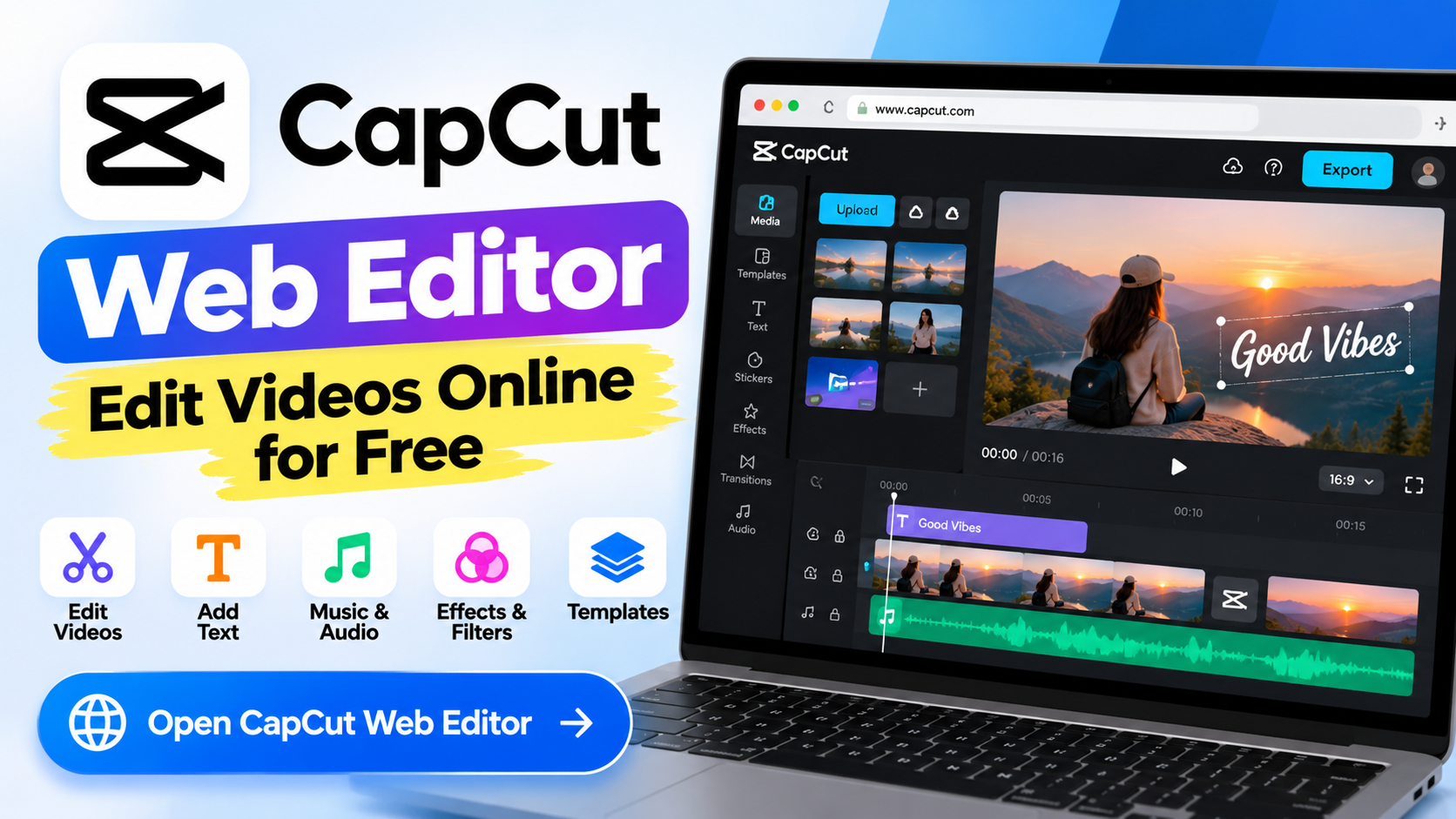
CapCut Web Editor: Edit Videos Online for Free
Video editing has become an important part of creating content for social media, YouTube, and other online platforms. Whether you are a beginner or an experienced content creator, having an easy-to-use video editor can help you create engaging videos without complicated software.
The CapCut Web Editor is a browser-based video editing tool that allows users to edit videos online without installing a desktop editing application. It offers a convenient way to work on video projects using a compatible web browser and an internet connection.
What Is CapCut Web Editor?
CapCut Web Editor is the online version of CapCut’s video editing experience. Instead of downloading and installing a desktop application, users can access supported editing tools through a web browser.
It is designed for people who want to create social media videos, edit clips, add text, apply effects, and prepare content for sharing.
Depending on the features available to your account and region, the web editor may offer tools such as timeline editing, transitions, filters, audio editing, text overlays, templates, and AI-assisted features.
You can visit the official CapCut website to check current availability and access the web editor.
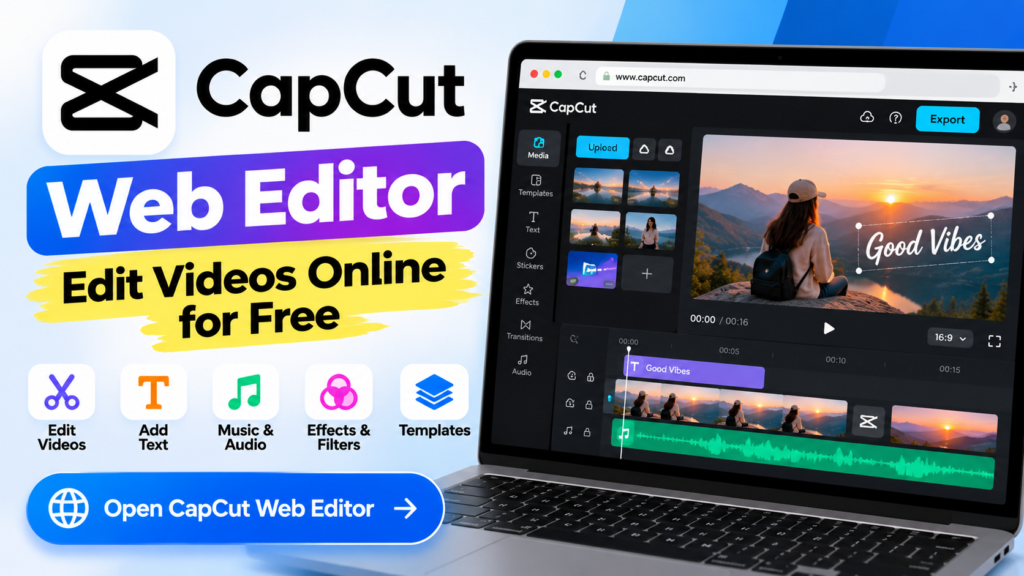
Main Features of CapCut Web Editor
1. Edit Videos Online
One of the biggest advantages of a browser-based editor is convenience. You can work on supported video projects without installing a full desktop editing program.
This can be useful when you are working on a compatible computer that does not have much storage space available.
2. Timeline Video Editing
Timeline editing allows you to arrange video clips, audio, images, and other elements in the desired order.
You can trim footage, split clips, adjust their placement, and organize your project to create a smoother final video.
3. Text and Titles
Text tools help you add titles, captions, labels, and other information to your videos.
Creators can use text overlays to introduce a topic, highlight important points, or make videos easier to follow. The available fonts, animations, and styling options may vary.
4. Effects and Transitions
Effects and transitions can help make a video more visually engaging. You may be able to apply filters, visual effects, and transitions between clips, depending on the tools available in your version of the editor.
Use these features thoughtfully so that they support your content instead of distracting viewers.
5. Audio Editing
Audio is an important part of video production. Supported audio tools may allow you to add music, adjust sound levels, trim audio, and synchronize sound with your footage.
Always check the usage rights for music and sound effects before publishing your video, especially for commercial projects.
6. Templates and AI Tools
CapCut may provide templates and AI-assisted features that help simplify certain editing tasks. Availability can depend on your account, subscription, region, and current product version.
These tools can help users work more efficiently, but it is still important to review the final video before publishing it.
7. Export and Sharing
After completing your project, you can use the available export options to prepare your video for sharing.
Depending on your account and project, you may have options for selecting resolution, frame rate, or other output settings. Some features may require an account or paid plan.
How to Use CapCut Web Editor
Follow these steps to start editing videos online.
Step 1: Visit the Official Website
Open a web browser and visit the official CapCut website at https://www.capcutt.org/.
Look for the online video editor or web editing option. Use the official website to avoid confusing the service with unrelated third-party websites.
Step 2: Sign In if Required
Depending on the current access requirements, you may need to sign in or create an account to use certain editing features.
Follow the instructions shown on the official website.
Step 3: Start a New Project
Open the web editor and create a new project if that option is available.
Choose the appropriate project format for your intended platform. For example, vertical video is commonly used for short-form social media content, while landscape video is often suitable for standard YouTube videos.
Step 4: Upload Your Media
Import the video clips, images, and audio files you want to use.
Make sure you have permission to use the media you upload. Large files may take longer to upload depending on your internet connection.
Step 5: Edit Your Video
Arrange your clips on the timeline and make the necessary adjustments. You can trim unwanted sections, add text, apply supported effects, and adjust audio.
Preview the project regularly to make sure everything is in the correct order.
Step 6: Review Your Project
Before exporting, check the video from beginning to end. Look for spelling mistakes, unwanted blank sections, audio problems, and transitions that do not work as expected.
Step 7: Export Your Video
Select the available export option and choose suitable settings for your project.
Wait for the export to finish, then review the resulting video before sharing it.
Benefits of Using CapCut Web Editor
No Desktop Installation Required
The web editor allows you to access supported editing features through a browser without installing the desktop application.
Convenient for Beginners
Its visual editing interface can make common editing tasks easier to understand for people who are new to video production.
Useful for Social Media Content
You can create and prepare videos for platforms such as YouTube, Instagram, and TikTok, subject to the export options and content requirements of each platform.
Access from Compatible Computers
You may be able to work from different compatible computers by signing in to your account, although available projects, cloud features, and settings can vary.
Helpful Editing Tools in One Place
Combining supported video, text, audio, and effects tools in one browser-based workspace can reduce the need to switch between multiple applications.
CapCut Web Editor vs. Desktop Editor
Both versions can be useful, but the best option depends on your workflow.
| Feature | Web Editor | Desktop Editor |
|---|---|---|
| Installation | Runs in a compatible browser | Requires installation |
| Internet access | Usually needed for online access and cloud features | Some workflows may work offline |
| Computer resources | Depends on browser and project | Depends on application and project |
| Editing tools | Varies by version and account | Varies by version and account |
| Best suited for | Convenient browser-based editing | Users who prefer a dedicated application |
Tips for Better Online Video Editing
If you want to improve your results with CapCut Web Editor, consider these practical tips:
- Organize your files: Keep your footage, images, and audio organized before importing them.
- Choose the correct aspect ratio: Use a format appropriate for the platform where you intend to publish.
- Avoid excessive effects: Simple, consistent editing often produces a more professional result.
- Check audio levels: Make sure dialogue is clear and background music does not overpower it.
- Use high-quality footage: Better source material usually produces better results.
- Save your work regularly: Follow the editor’s saving and project-management options to reduce the risk of losing changes.
- Review export settings: Select a suitable resolution and frame rate based on your footage and intended use.
Is CapCut Web Editor Free?
CapCut may offer free web editing features, while certain advanced tools, assets, or services may require a paid subscription or have usage limitations.
The exact features and pricing can change over time and may differ by region or account. Check the official CapCut website for the most accurate information about current plans and availability.
Does CapCut Web Editor Work on Mobile?
Access and functionality on mobile browsers may vary. Some editing tasks may be easier in the dedicated CapCut mobile application, which is designed for supported smartphones and tablets.
If the web editor does not work as expected on your phone, consider using the official mobile app from the relevant app store.
Frequently Asked Questions
Can I edit videos online with CapCut?
Yes, CapCut offers browser-based editing options. Availability and supported features depend on the current service, your device, and your account.
Do I need to download CapCut to use the web editor?
You generally do not need to install the desktop application to use a browser-based editor. However, you need a compatible browser and internet access for the online service.
Can I use CapCut Web Editor on a PC?
Yes, it is intended for browser-based use on compatible computers. Performance depends on your computer, browser, internet connection, and project complexity.
Can I export videos in HD?
Export resolutions depend on the available settings, your account, and the project. Check the export panel for the options offered to you.
Is CapCut Web Editor safe to use?
Use the official CapCut website, protect your account credentials, and review permissions before uploading files. Avoid unofficial websites that request unnecessary personal information or downloads.
Is CapCut Web Editor better than other online editors?
That depends on your needs. Compare the available editing features, ease of use, export options, pricing, and device compatibility before choosing an editor.
Conclusion
The CapCut Web Editor offers a convenient way to edit videos online without installing a dedicated desktop application. Its browser-based workflow can be useful for creators who want to arrange clips, add text, work with audio, apply effects, and prepare content for social media.
Whether you are making short videos, editing personal footage, or preparing content for a channel, take time to explore the available tools and choose export settings that match your goals.
Visit the official CapCut website for the current web editor, and explore Capcutt.org for additional CapCut-related information, installation guides, and video editing tips.